Bushcraft 101 a Field Guide to the Art of Wilderness Survival Download
"Charlie flake me!" If you recall those words, you lot've probably been poking around on the internet long enough to come across it go through some pretty big changes, from the advent of social media to the meteoric ascension of cryptocurrency. And over again, if you remember those words, you might exist surprised to learn that the video they came from has recently been subjected to some other internet-era innovation: the non-fungible token, or NFT.
NFTs like "Charlie Bit My Finger" (the video's official championship) have taken the internet past storm lately, and the YouTube sensation is the latest in a long lineup of digital media to sell for "escalating prices" reaching far into the millions. Just what exactly is this craze, and why are people suddenly so interested in purchasing these works of art that only be in the digital realm? And, in peradventure an fifty-fifty stranger twist, why take NFTs already developed a "complex legacy of greenhouse gas emissions"? Nosotros'll fill you in on everything you need to know to stay in the NFT loop, including what they are, the controversies they've sparked and the dissimilar means people are using (and even benefiting from) them.
What Are NFTs, and Why Are They Such a Big Deal?
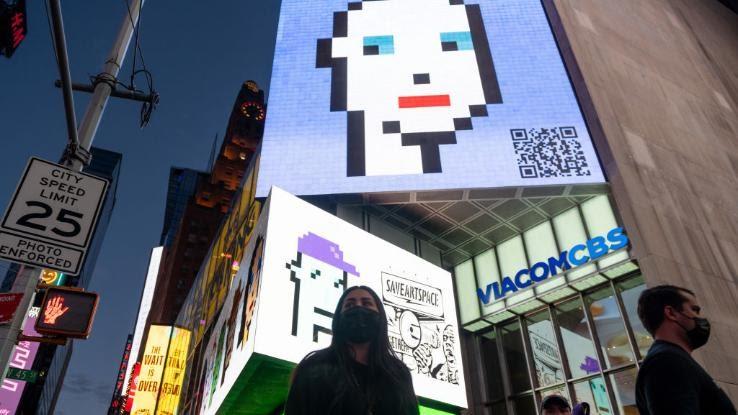
Like the information-mining, blockchains and cryptocurrencies that came earlier them, NFTs accept garnered their fair share of confusion from internet users across the globe. But one of the easiest ways to understand what NFTs are is to empathise the uniquely digital problems they solve. Since the advent of the internet, it'south traditionally been hard to make money off of digital creations of whatever sort. If you lot've ever made a meme, you probably know firsthand that, one time it hits social media, the odds you'll e'er be recognized equally its creator essentially vanish as it spreads further and further across Tweets, Instagram stories or Facebook posts without whatever form of credit to yous.
The internet is still in a sort of Wild West phase as far equally copyrighting is concerned. The American Bar Association explains that the "rapid development" of internet sites and technologies in contempo years has "created new possibilities for competitors, brand enthusiasts, unscrupulous entrepreneurs, and even nonhumans to borrow or otherwise violate…intellectual belongings rights." While copyright laws, which protect intellectual property like artwork, do technically be, it's hard to count on them being enforced if you're an individual creator. This is due to the simple fact that digital images, gifs, videos and other similar files are and then incredibly like shooting fish in a barrel to reproduce — and to transfer to others via the internet, making it difficult to control their spread from person to person once information technology's begun.
That'due south where NFTs come in. NFTs allow digital artists to more or less attach a digital trademark to their own work, similar to a traditional artist adding a signature to a painting. That's how the digital work becomes "non-fungible," which means that the original tin't be replaced or replicated in a way that leads people to think the replica is the existent thing. Through this process of attaching a unique token to the digital file, a slice of digital fine art becomes much more similar traditional fine art.
While reprints and reproductions of the Mona Lisamay appear on posters, for case, in that location'due south but one authentic original. It'southward tangible, though — you can visit the Louvre to see the original, physical painting in person — whereas digital fine art isn't. A slice of digital art needs a digital signature of sorts to distinguish it from a reproduction and certify its actuality. That'south what an NFT does — and that'southward how people who buy digital artwork know they're getting ownership over "the real affair."
NFTs are made possible by blockchain engineering — a trait that they share with cryptocurrency — which is substantially a digital ledger where an online buy transaction and a unique token that provides proof of ownership (in this example, that'southward the NFT itself) are recorded. Surprisingly, however, the very technology that's allowing digital artists to monetize their creations has as well get a source of climate controversy.
Equally Ask Money notes, it requires huge amounts of free energy and electricity to create NFTs, primarily because of the various systems in identify that keep the fiscal records attached to them secure. Ethereum, the blockchain where most NFT transactions and data are stored, uses nearly as much electrical free energy in one year equally the unabridged country of Peru. And this has deterred some environmentally conscious artists from jumping on the trend.
Chris Precht, an Austrian builder and artist, recently canceled his plans to sell 300 pieces of digital art with NFTs after learning well-nigh the environmental implications. "The numbers are merely crushing," Precht said on an Instagram IGTV video. "As much as it hurts financially and mentally, I can't." Precht went on to reveal that creating the 300 digital art tokens he had planned to sell would eat as much energy as he would normally utilize in about two decades.
While some artists and fans claim that the environmental concerns surrounding blockchain technology are existence blown out of proportion, others are on the hunt for more eco-friendly options. In Sweden and Norway, for example, some platforms have already begun pioneering the utilise of hydroelectricity to make blockchain more sustainable. But information technology remains to be seen whether NFTs volition end upward with any staying ability — and if their environmental impact could be addressed in lasting means.
Simply How Big Are NFTs Getting?
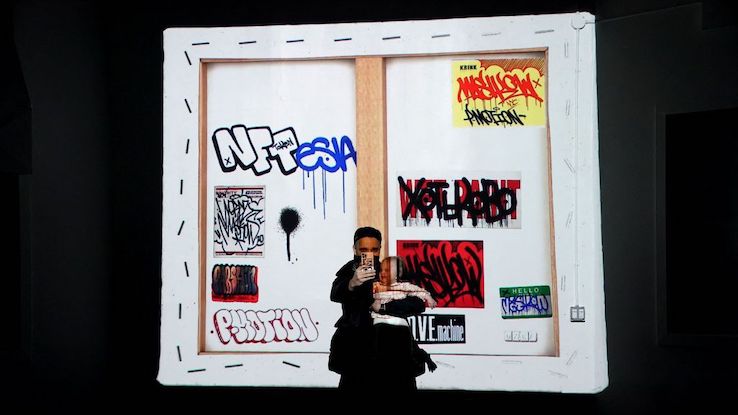
In spite of the ecological concerns, the NFT tendency seems to have gone from about unheard of to all the rage in a very short menstruation of time. NFTs made huge waves when they outburst onto the online stage, generating around $2 billion during the kickoff quarter of 2021.
Among the most famous NFTs ever sold is a piece called Everydays – The Beginning 5000 Days past an artist named Beeple. A blended of five,000 dissimilar images collected over the same number of days, the piece sold for over $69 million at a Christie's auction.
But you don't have to exist an artist to hop aboard the NFT train. Twitter CEO Jack Dorsey turned his first-ever tweet into an NFT and ended up netting $2.9 million for its auction. NFTs are also allowing popular meme and gif creators to greenbacks in. Remember Nyan Cat, the pixelated, toaster pastry-bodied feline that was all over YouTube more than than a decade ago? Its creator offered information technology for sale every bit an NFT and made over $500,000. And Nyan Cat is in adept company; "Charlie Bit My Finger" sold for more than $760,000 and is set to leave the video-sharing platform for good once the buyer officially takes ownership.
NFTs have as well begun to attract gamers. Some newer games now characteristic stores where you can purchase NFTs of characters and virtual pieces of property. Even celebrities are getting in on the trend; actress Lindsay Lohan has been making headlines by launching her ain NFTs.
Are NFTs the Future of Fine art?
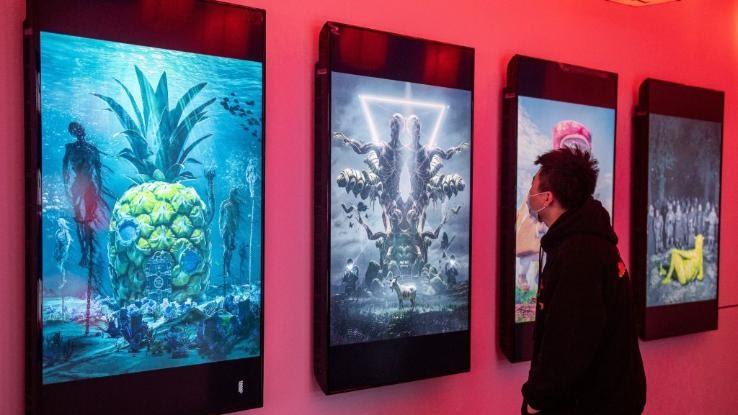
The question of whether or not NFTs are here to stay isn't i we can answer — not nevertheless, at to the lowest degree, in part because they're only just starting to find their niche in our digital cultural consciousness. While their potential longevity remains to be seen, their story is still poised to exist an interesting one to spotter unfold as copyright lawyers attempt to hash out what the trend may mean for the futurity of online sharing. Some of the benefits of NFTs are obvious, as they've begun giving digital artists the opportunity to monetize their work in a much more reliable and profitable way than ever before.
Certain types of NFTs even allow artists to retain fractional ownership of their work subsequently it's been sold. The upshot is that they get a share of the profits after each new auction, like to the mode actors are paid royalties each time a TV evidence that they appeared in arrogance.
Function of what makes the NFT world captivating to watch, especially from afar, is that it tends to be both fascinating and bizarre all at once. Much like the physical art world, some of the pieces that have been turned into NFTs obviously showcase a great deal of talent from their artists. Other pieces have risen to notoriety only because they've inspired someone out in that location to spend an obscene amount of money on something that seems ridiculous to nigh people.
While some collectors seem overly confident nearly the future of NFTs (the buyer who purchased Jack Dorsey's original tweet compared it to owning the Mona Lisa), not anybody is so upbeat. A March 2022 assay from Bloomberg reported that the NFT market seems to be cooling down, citing large declines in the selling prices of NFTs, likely in response to geopolitical conflicts. However, that same calendar month Zuckerberg announced at SXSW that Instagram had hopped aboard the NFT train.
Some skeptics proceed to wonder whether the NFT bubble was more the issue of bored stimulus recipients during the COVID-19 lockdown and less the result of a true shift in the way we might consume fine art. But whether or non the bubble is on its way to bursting, the rise of the NFT has defenseless the world'due south attention. And it's earning many artists a great deal of money — at least for the moment.
Source: https://www.ask.com/culture/what-are-non-fungible-tokens-nfts?utm_content=params%3Ao%3D740004%26ad%3DdirN%26qo%3DserpIndex

Enregistrer un commentaire for "Bushcraft 101 a Field Guide to the Art of Wilderness Survival Download"